

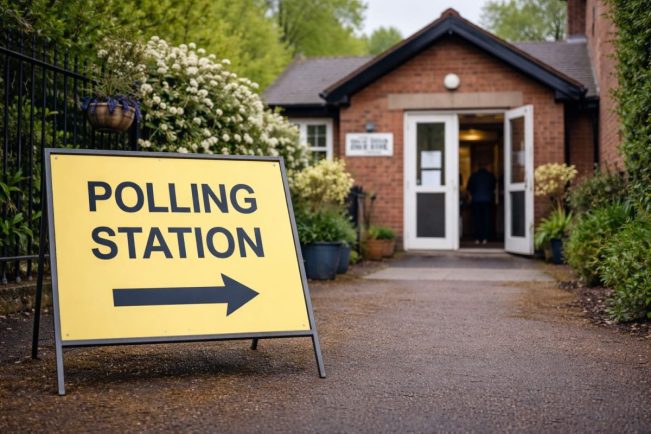
Prime Minister Keir Starmer has performed yet another dramatic U-turn by restoring local elections for 4.6 million voters, scrapping plans to delay the ballots until 2027 after fierce political pressure and the threat of a High Court showdown.
Elections across 30 local authorities will now take place in May, reversing a controversial decision that had sparked a backlash from the Conservatives, Reform UK and a campaign led by The Telegraph. The climbdown marks the latest in a string of reversals by the Prime Minister.
Ministers had argued that an impending reorganisation of local councils would make holding elections this year expensive, complex and unnecessary. Critics accused the Government of trying to sidestep heavy losses to Reform UK on May 7.
The policy reversal emerged just two hours after Sir Keir insisted he was finished with about-turns. It was confirmed in a letter from Local Government Secretary Steve Reed, sent ahead of a planned legal challenge by Reform in the High Court later this week.
Kemi Badenoch, the Conservative leader, said:
“Labour’s attempts to deny democracy have failed. It is yet more chaos from a useless zombie government incapable of making basic decisions.
“Councils have been strung along for months by a government terrified of facing voters at the ballot box.
“Steve Reed must now come clean about whether Labour’s nakedly partisan interests were behind his decision. The Telegraph deserves great credit for its campaign in defence of local democracy.”
On Monday night Labour faced questions over whether ministers had pressed ahead with cancelling the elections despite knowing the move could be unlawful. Mr Reed came under pressure to resign after Reform accused him of acting illegally when postponing the ballots.
He said the Government had changed course after receiving “recent legal advice” that the delays were unlawful. In his letter he also confirmed that the Government would cover Reform’s legal costs, believed to be around £150,000.
Nigel Farage, leader of Reform UK, declared the outcome a triumph.
“It’s a victory for Reform, but more importantly, it’s a victory for democracy in this country,” he said.
“It seems to me that if a government minister does something illegal, they really ought to resign.”
Reform had argued that Mr Reed acted unlawfully by delegating the final decision on postponement to councillors, when only ministers have the authority to delay local elections. Mr Farage also backed calls to strip ministers of their power to cancel ballots under an obscure clause in the Local Government Act 2000.
Lord Pickles, a former communities secretary, said:
“Congratulations to The Telegraph for a brilliant campaign. Cancelling elections for administrative convenience runs against the spirit of our constitution. The motivation for the delay was plain political cowardice.”
Polling conducted last month for The Telegraph suggested Labour could lose control of 10 councils if the elections were held as planned, with majorities at risk of being wiped out.
Robert Jenrick, a former communities secretary who defected from the Conservatives to Reform UK last month, claimed government lawyers had previously warned that postponing elections would likely be unlawful, even during the pandemic.
“During the height of Covid, there were clearly exceptional circumstances which made close social contact risky,” he said.
“Even then, the most senior government lawyers advised that it would almost certainly be unlawful to cancel local elections two years running.
“They made clear that the secretary of state – rightly – wouldn’t have the power to delay democracy. It could not have been stronger. That advice will not have changed.”
It is understood the KC said to have advised Mr Jenrick was Sir James Eadie, the First Treasury Counsel, who continues to advise the Government on major legal matters.
Councils are now scrambling to organise the votes at short notice. Simon Ward, a Conservative councillor at Rugby borough council, said:
“The Government has absolutely piled on pressure and chaos to councils unnecessarily.”
Taxpayers are expected to face a bill of around £63 million to ensure affected authorities can stage the elections and implement the planned reforms.
The announcement came just hours after Sir Keir told BBC Radio 2 that he would hold firm despite previous reversals. Asked whether he would “stick to your course”, he replied:
“Absolutely. I know exactly why I was elected in with a five-year mandate to change this country for the better and that’s what I intend to do.”
The latest U-turn follows a series of policy shifts under his leadership, including on winter fuel payments, mandatory digital ID cards, £5 billion in welfare reforms, the two child benefit cap and an inquiry into grooming gangs. It also comes days after a number of senior aides left Downing Street in the wake of the Lord Mandelson row.
Starmer’s latest U-turn comes as welcome news to voters across the country. Last month controversy spilled out onto the streets. In Redditch around 50 residents gathered outside a community centre to protest after the Labour run council voted to delay its May election until 2027. Demonstrators chanted “let us vote” and pressed placards against the windows as councillors met inside.
Tensions flared when Labour councillor Ian Woodall responded to heckling by calling a member of the public a “Nazi”. Police attended but confirmed no offences had been identified. Mr Woodall later apologised, saying:
“My reaction was an error of judgment and fell short of the standards expected of me as a councillor. I am sorry to the individual concerned and to everyone present.”
Despite now reinstating the local council contests, Mr Reed has not reversed his decision to cancel four mayoral elections in Greater Essex, Sussex and Brighton, Hampshire and the Solent, and Norfolk and Suffolk.