


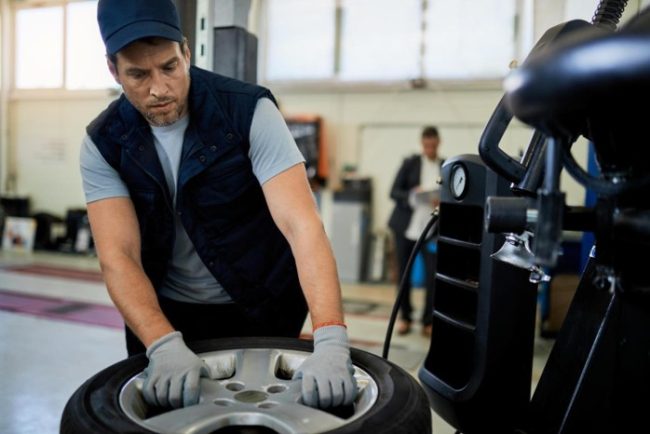
Most people choose a garage the way they choose a dentist, which is to say they went to one once, it was fine, and they never revisited the decision. That works reasonably well until the day it does not, and in a category where the average customer has no way of judging the work, the difference between a good fitter and a poor one is largely invisible until something goes wrong.
Know Roughly What It Should Cost First
The single most useful thing a customer can do is establish a price before walking in. Tyre pricing is opaque from a forecourt and entirely transparent online, and owners using Tyres.co.uk or comparable services to check what a set in their size actually costs arrive at the conversation with a reference point rather than a hope. That does not mean the local fitter must match the lowest figure available anywhere, since convenience, speed and a relationship have value. It means you can tell the difference between a fair local premium and a number picked because you looked uncertain.
The Questions Worth Asking
A few specific questions separate outfits quickly. Ask what the quoted price includes, and listen for whether balancing, a new valve, disposal and VAT are in the figure or added afterwards. Ask what brand and exact model they are quoting, rather than accepting a tier description, since manufacturers make several models at different price points. Ask whether they can obtain an alternative if you would prefer a different product. And ask how long the job will take, because a fitter who cannot answer that has not thought about their own workflow.
Watch for the Upsell Pattern
There is a recognisable sequence that consumer bodies have documented across motor servicing: a customer arrives for one thing, and a series of additional urgent problems is discovered while the vehicle is on the ramp. Some of those discoveries are entirely genuine, since a car up in the air reveals things a driveway does not. The pattern worth noticing is the combination of urgency, vagueness and pressure to authorise immediately. A trustworthy garage will show you the component, explain what is wrong in terms you can follow, and be comfortable with you taking a day to think or seeking a second opinion. The Competition and Markets Authority has examined consumer protection and pricing transparency across motor services, and the recurring theme in that work is that clear, upfront pricing and the customer’s ability to compare are what keep the market honest.
Alignment Is the Common Genuine Recommendation
One suggestion that frequently follows a tyre change is a wheel alignment check, and it is worth taking seriously rather than dismissing as an upsell. Misalignment wears a new set of tyres unevenly and quickly, and given the state of local roads it is a real and common condition rather than an invented one. The distinction is whether they can show you evidence, either uneven wear on the old tyres or a printout from an alignment machine, or whether it is simply asserted. Evidence is the test for every recommendation.
Small Details That Indicate Care
There are quiet signals of a well-run workshop. Wheel nuts torqued with a torque wrench rather than run up with an impact gun, which matters for both safety and for whether you can remove a wheel at the roadside later. Protective covers on alloy rims during fitting. Valve caps replaced. The old tyres accounted for rather than vanishing. A written invoice itemising what was done. None of these are dramatic and collectively they tell you whether the people doing the work take it seriously. It is also entirely reasonable to ask to see the old tyres and the wear pattern on them, and a good fitter will show you without hesitation.
When Something Does Go Wrong
Problems after a fitting are usually one of a small number of things: a vibration at speed suggesting a balancing issue, a slow deflation pointing at a valve or a seating problem, or a pull to one side indicating alignment. All three are the fitter’s responsibility to put right if they arise from the work, and a competent garage will do so without argument. How a business handles that conversation is considerably more informative than how it handles the sale, which is why the fitter worth keeping is often the one who dealt gracefully with a problem rather than the one who was cheapest on the day.
Build the Relationship Before You Need It
The practical advice is to sort this out when nothing is urgent. Get a set fitted somewhere on a planned basis, see how they handle it, and you will know whether to go back. Deciding under pressure with a flat tyre and a diary full of commitments is how people end up somewhere they would not have chosen. A good local fitter is genuinely worth having, and the time to find one is a Tuesday morning when you have a choice.