


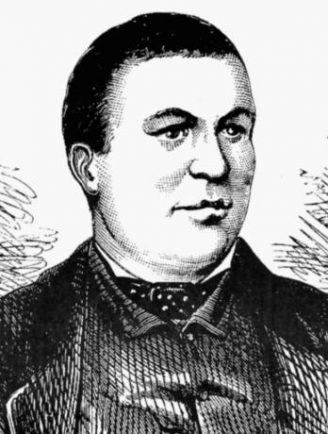
HE WAS a farm boy who left Redditch to conquer England but he remains one of the borough’s relatively unknown sporting heroes.
Now calls are being made to bring the life and career of bareknuckle boxer Tom Paddock to a greater audience.
Webheath resident Steve Taylor is believed to be a distant relative of Paddock and wants to see more done to bring the pugilist to the attention of the wider public.
“He’s been missed out of history really.” he told the Standard.
“People walk past the place he lived every day without knowing it.”
Paddock was born in 1822 at the back of Red Lion Street which is now where the Town Hall is based and was baptised on August 25th of that year at St Stephen’s Church. He was one of three children born to Elizabeth and George Paddock, who was a gardener.
It is believed in his early days Paddock fought a number of minor opponents while still working as a farm boy. The site by the Crabbs Cross island, near the former Star and Garter pub, was popular as being based on the Warwickshire/Worcestershire border it allowed those involved to jump into a different county should the police come calling.
In 1844 Paddock decided to take up the sport professionally, fighting under the nickname of The Needle Pointer in reference to his home town. He weighed in at 12 stone, stood 5ft 10.5 inches tall and was known for his courage, foul tactics and uncontrollable temper.
For six years he was undefeated until he was beaten by William Thompson in his first tilt at the Championship of England.
He was involved in some epic battles with one of the most notable being a 121 round marathon with Aaron Jones lasting two hours and 24 minutes. His career was interrupted by ten months in jail in 1852 after a riot broke out in Derby during his fight with Harry Poulson.
Paddock lived in the Kensington area and married Esther Armour in 1854. Two years later, with some confusion over the holder of the title, Paddock declared himself champion of England as he was prepared to taken on all-comers, which goaded
Harry Broome into coming out of retirement to put the title on the line. The fight took place on March 19, 1856. After a slow start Paddock was said to have dominated the bout from round 20 onwards, eventually winning in 51 rounds lasting one hour and three minutes. The beating he gave Broome not only secured him the title but ended his opponent’s career.
It was a short-lived reign however as he lost the belt shortly after to the ‘Tipton Slasher’ Bill Perry.
He made two unsuccessful attempts to win back the title with the first in 1858 ending in defeat to Tom Sayers, who agreed to fight for just £150 instead of the usual £200 as Paddock was too poor to raise the money.
The fight had previously been delayed due to a bout of rheumatic fever which had hospitalised Paddock. Sayers, in an act of kindness, visited him in Westminster Hospital and donated £5 to him after seeing he was down on his luck.
The beginning of his demise began when Paddock suffered severe stab wounds to the face and head inflicted during a fight at a pub in Leicester Square. Then in 1860, with the title vacant, he challenged Sam Hurst, a gigantic Lancashire wrestler turned boxer, for the crown.
Paddock’s superior skills saw him dominate the bout but in the fifth round he received a freak blow which The Times stated ‘all but killed him’. It was the end of his career.
He is next referenced in a court report from 1862 stating Paddock was fined for betting outside a shop in Leicester Square and using foul language when asked to move on.
He died from heart disease on June 30th, 1863 and is buried in Findley Place in London.
Overall he fought 16 times, winning 11 fights and losing just five times. As a fighter he is considered one of the greats as he took on every big man of the day and beat most.
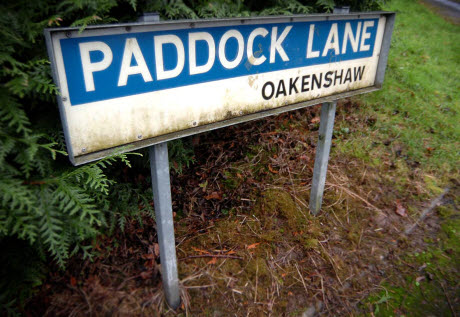
Although Paddock Lane in Oakenshaw is named after the fighter, many like Mr Taylor believe the fighter is worthy of greater recognition.
“He was heavyweight champion and someone the town should be proud of.”
Tom Paddock (s)