

A REDDITCH stroke survivor is urging people to act F.A.S.T. should a stroke strike someone down.
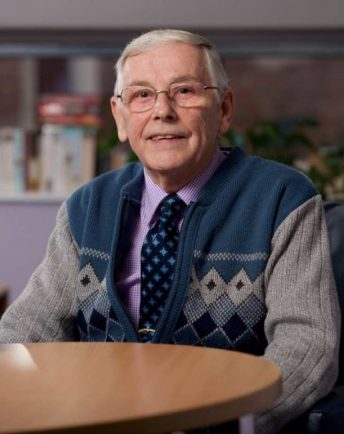
Alan Corbett, aged 69 and from Webheath, survived a stroke in 2013 and is now spreading the word about recognising the F.A.S.T. test symptoms.
Alan had gone to bed feeling unwell and found himself having to get up a number of times during the night, each time feeling unbalanced and struggling to walk.
The following morning he struggled to get up. Eventually reaching the bathroom, he dropped everything he tried to use.
“I became really irritated and it was only when I caught my reflection in the mirror that I realised something was seriously wrong,” said Alan. “My face had fallen on the left side and I couldn’t smile or call for help.”
When he finally managed to attract the attention of his wife, she called an ambulance immediately. It quickly arrived and after conducting the F.A.S.T. test the paramedics rushed Alan to hospital.
“My father had died of a stroke 20 years previously, so I was worried about my chance of recovery,” said Alan.
“After nearly two weeks in hospital, I began to regain my speech and after six weeks of physiotherapy, I was able to walk confidently.”
The Stroke Association is calling for people to be more aware of the early warning signs of stroke.
The F.A.S.T. test identifies the three most common symptoms:
n Face: Can the person smile? Has their mouth or eye drooped?
n Arm: weakness: Can the person raise both arms?
n Speech problems: Can the person speak clearly and understand what you say?
n Time to call 999.
Bernice Jones from the Stroke Association, said: “Having a stroke is devastating. It can happen to anyone, of any age, at any time.
“We want more people to learn the F.A.S.T. test to help others to save lives.”
For more, visit www.stroke.org.uk/FAST