


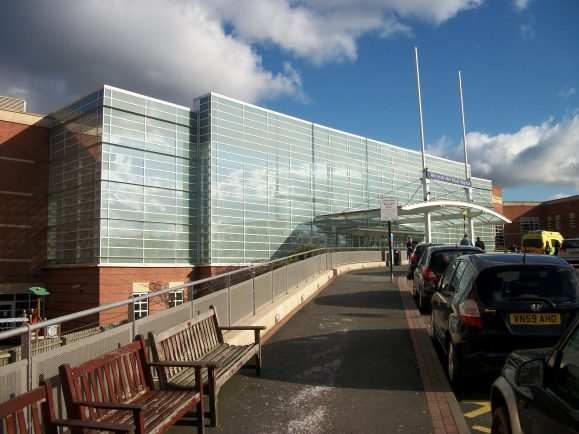
NEARLY 700 patients a month are waiting longer than 12 hours in Accident & Emergency at Worcestershire Royal.
Of these, more than 460 are over 65 and more than 100 over 85 – the Government’s target is that all patients should be seen and dealt with within four hours.
The situation is so bad an independent report into the crisis at Worcestershire Acute Hospitals NHS Trust says it cannot enter another winter with its current levels of bed capacity.
Worcestershire Royal Hospital is running close to or over 100 per cent bed occupancy with the Alexandra Hospital in Redditch close behind.
The report, by Carnall Farrar into the Trust’s Urgent and Emergency Care, speaks of a ‘siege mentality’ among staff in the Royal’s A&E department where poor performance against breaches in targets, including the care of patients in corridors, had become ‘normalised’.
However it said the situation was not that severe at the Alex.
It identifies the centralisation of services at Worcester without additional bed capacity as a key driver impacting on A&E and says a planned increase in capacity in 2020 is simply too far away.
It says: “The Trust has a long history of poorly planned bed reductions stretching back some 20 years, which has led to the current situation where
patients are routinely cared for in a corridor because of the lack of capacity to do otherwise.
“There have been four chief executive officers, five chief operating officers, four medical directors and three Nursing Directors in the last two years and this has fueled a sense of continual crisis and was a factor in the absence of system-working or collaboration.”
While praising the impact of chief executive Michelle McKay it says: “Despite this, the numbers of patients waiting within the A&E departments has remained at unacceptable levels.”
It adds that too many ideas had failed to ‘stick’ – due largely to the siege mentality of staff having to deal with an unacceptable patient experience for too long – and called for “clearer strategic leadership is needed in setting direction, driving cultural change”.
A spokesperson for Worcestershire Acute Hospitals NHS Trust said: “The issues identified in the report are not new. We have a major programme of work relating to flow across the Trust and Carnall Farrar are providing valuable additional resource and expertise as part of a national arrangement put in place for Trusts facing the greatest challenges on Emergency Access standards.
“The Trust’s outline business case for additional capacity on the Worcester site was approved by the Department of Health in December, and the Trust is working with NHS Imporvement to progress the creation of additional capacity by next winter.
“Nevertheless, even with these changes, and in common with hospitals across the country, it has been a very difficult winter. An evaluation of our winter plan will be undertaken to inform our planning for next winter.”