


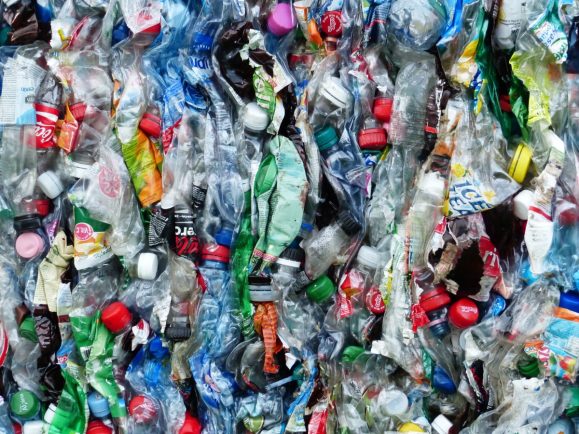
The 20th century gave us technological developments, better transportation and more accessible space exploration. Unfortunately, the manufacturing of plastic packaging was also a feature of that period, one that was irreversibly damaging to the environment.
And if plastic packaging isn’t worse enough on its own, it has been noticed that only 9% of plastic waste is recycled globally. What’s worse is that all the plastic accounts for 3.4% of worldwide greenhouse gas emissions that trap heat and trigger severe respiratory illnesses in people. They also make the Earth warmer by the year, disrupting nature’s regular cycles and affecting millions of plant and animal species.
But how did we get to these numbers? Well, one of the biggest plastic polluters in the world consists of massive companies whose policies remain the same as decades ago, as they only focus on minimising profits. Although some approach sustainability measures to appeal to an increasing audience who mitigate climate change, the risks of greenwashing are more frequent than we thought.
Some of these businesses affect local areas more than others, which is why we’ll analyse the organisations whose packaging is affecting the environment from the United Kingdom.

How was the study conducted?
The recent study made by Surfers Against Sewage, a significant association that started its activity 30 years ago, was conducted by more than 4,000 scientists in places like the UK’s coastlines and city streets. The project lasted for about one year, and it involved the examination of more than 30,000 polluting items collected on the way.
The garbage was found to account for 12 big organisations that had approached sustainability before and made considerable efforts to include recyclable products in their systems. One of these companies is Coca-Cola, the business already known as the world’s top polluter. Millions of branded products were found in numerous countries in the form of plastic bottles, which are created through fossil fuels. But Coca-Cola is not the only company responsible for climate damage.
Mcdonald’s and PepsiCo, second and third after Coca-Cola
Not surprisingly at all, two similar companies, McDonald’s and PepsiCo, have identical contributions to plastic litter around the world. If Coca-Cola’s branded plastic pollution accounts for 17% of the UK’s entire pollution problem, McDonald’s had 11% contribution, and PepsiCo even less.
Unfortunately, McDonald’s, being the most popular fast-food chain in the world, is not helping in handling the problem because the company was called out before for its consistent negative effect on the environment. The emissions produced by the company are now part of global deforestation, despite its policy on recycling paper and waste.
How is the UK handling these issues?
Although the majority of people in Great Britain consider climate change a worrying state of the world, governments are lacking rapid solutions. For instance, the SAS charity offered a plan regarding a deposit return scheme for drinks and materials that companies in the UK should implement. Still, the official body delayed the project until 2025 in England, Wales, Scotland, and Northern Ireland.
The charity put considerable pressure on governments before since sewage discharge and pollution are affecting the entire UK. On their website, you can see the areas where there are sewage pollution alerts or similar risks, while areas free of pollution dangers are less frequent. These are long-term effects of plastic packaging, and they can be improved through a circular business model that should be implemented by the government and investing in recycling solutions like balers for plastic material.
When confronted about the issue, all spokespersons from these companies recognised their impact but also pointed out how their multiple initiatives made considerable improvements in getting rid of litter. The problem is that the lack of better improvement can be seen since 2021 when plastic consumption got back on track after decreasing during the pandemic. What’s worse is that the cost of waste management infrastructure is increasing, and the financial burden on low and middle-income countries cannot be met.
Explaining the UK’s climate change strategy
The UK has a few strategic pillars to mitigate climate change, of which we can recall reducing greenhouse emissions, enhancing business transparency and mitigating climate-related financial risks. In 2050, the UK should become a net zero space by developing better climate change leading plans.
However, all these strategies are not enough to show real impact. Indeed, consumption-based emissions have fallen by 2% since 2018, but considering how many people are affected by the heat, we’re not sure what the country will achieve until 2050. It is expected that by that time, around 7,040 yearly deaths will be triggered by intense heat.
Can global warming be stopped?
The truth is that global warming is a serious topic and event that cannot be stopped that easily. It seems like for most governments, environmentalism is nothing more than a trend among youngsters that will pass at some point. Unfortunately, human emissions will worsen by the year, and the efforts will get more extreme. That’s why the winters in the UK are forecasted to reach warmer and wetter conditions, while summers will get extremely hot.
Let’s not forget that 2022 was the warmest year on record in the UK since extreme heat waves are becoming more intense. Moreover, the last months were a nightmare for people in the UK after Storm Ciarán led to flood warnings across England and Wales.
Hence, global warming is almost impossible to stop because extreme weather is not simply eliminated or reduced. On the other hand, it is possible to lower the effect on nature and slow down plastic production, which would considerably make the planet avoid heating up that fast. With less intense heating, nature would have the time to resist manufacturing and companies’ waste, while people’s health would not decline at a much younger age.
Final considerations
A recent study made by a charity in the UK found that some of the most damaging companies to the environment are Coca-Cola, McDonalds and PepsiCo. Considering they’re also the most profitable businesses globally, it might be possible for their policies to get better overnight, but it’s more likely that they’re focusing on profit and greenwashing rather than what truly matters.