


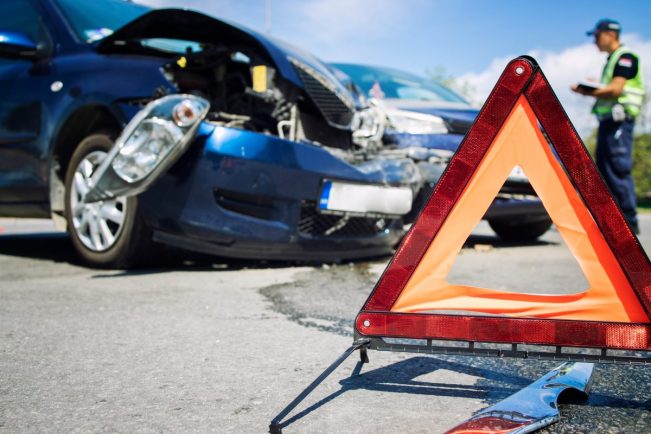
If you’ve ever heard that “Speed kills”, we’re here to tell you that this isn’t just a cliché but a statement backed up by scientific evidence. According to experts, the risk of death in road traffic accidents doubles for every 10 mph of high speed. In practice, this means that when you increase driving speed from 60 mph to 80 mph, the risk of fatal vehicle collisions also rises by 4 times.
The numbers show that in 2022 alone, there were a total of 12, 151 deaths that happened due to speeding, and it looks like it has become even more common and extreme since the beginning of the COVID-19 pandemic.
At what speed do road traffic accidents occur?
Car accidents can happen at any speed, and what’s most surprising is that they often occur below the 40-mph level. While it’s true that high-speed collisions can lead to severe injuries, low-speed crashes cause the most injuries on the road – in fact, according to studies, whiplash injuries are more likely to happen in rear-end collisions where speeds are as low as 10-15 mph. This is because even at slow speeds, the impact force still significantly damages soft tissues such as ligaments in the back, neck, or muscles.
What type of injuries can victims suffer due to speeding accidents?
Some of the most common injuries that can happen in a speeding accident are:
- Ruptures. These injuries are very common in road traffic accidents that happen due to speed, and in case there are broken bones in the legs and the arms, victims need to undergo surgical interventions accompanied by special physiotherapy and rehabilitation sessions.
- Fractures. They are also very common when it comes to speeding traffic accidents, with limbs and head taking the worst part of the collision. Blows to the windshield, for instance, can lead to facial and cranial fractures, often requiring surgery and a lengthy recovery process, which can take weeks or months. Some fractures also need the use of osteosynthetic material besides surgery, as traditional means like plaster may not be enough for the union of a fractured bone. The most common materials are plates, screws and nails, which need to be attached to all the fractured parts so they can be joined together.
- Traumatic brain injuries. Another injury that’s caused by speeding traffic accidents is traumatic brain injury, which is common, especially in road accidents and motorcycle accidents. Such injuries can have more or less serious consequences based on the force of the blow. No matter the severity, though, it is essential to get specialised rehabilitation treatment.
What are the legal consequences of speeding?
Speeding goes against the traffic rules, and the consequences aren’t limited to just getting a ticket. If speeding leads to an accident that turns out to be fatal, the driver can face serious legal problems. In case victims are injured, negligent drivers can be sued, as according to https://www.personalinjuryclaimscare.org.uk/, victims are entitled to getting compensation for all the harm they suffered. Moreover, if the accident results in victims dying, it’s possible even to get charged for reckless driving, and criminal negligence, leading to licence suspension, hefty fines, and even jail time.
How can speeding accidents be avoided?
The good news is that speeding accidents can be prevented, as long as you follow some basic rules while on the road:
Consider the three-second rule
This is perhaps one of the most important things to bear in mind when driving, as it allows you to gauge the distance between your car and the car in front of you. It’s a simple rule: all you need to do is to pick out a telephone pole, a parked car, or anything else in the distance as you are on the road and make a mental note of the time the vehicle in front of you passed it. As that happens, start to count in seconds, and if the vehicle passes the object before you count out to three, this shows you’re too close to it and need to adjust the distance. Now, keep in mind that this exercise isn’t meant to distract you from driving safely but rather to help keep proper distance between vehicles.
Leave earlier to the destination
If you usually run late, consider setting an alarm and leaving 30 minutes earlier. This will give you enough time to arrive at the destination without feeling tempted to exceed the speed limit just because you are in a rush. This is even more important if there aren’t favourable weather conditions: if it rains heavily or has icy roads, you’ll need more time to drive. This is something you shouldn’t overlook, as these weather conditions already increase the risk of accidents without speeding, so being in a hurry could only turn into a disaster.
Be patient while on the road
When driving, you may think that getting close to another fellow driver will give them a hint to speed up, but that’s not the case. Instead, it’s imperative to practise patience, as this will decrease the risk of accidents due to speeding. If you often go on a road that tests your patience, simply consider taking another route! Or, work on shifting your mindset and enjoy the ride, even if it’s slower than you may want it to be. Put on your favourite music, and just relax, knowing you will still get where you want even if it takes a little more time. It’s important to remain as calm as you can while on the road, as this will increase your safety.
The bottom line
Speeding is a major culprit in road traffic accidents, putting your safety and the safety of others at risk. If you don’t follow the rules and someone gets injured—or worse, the accident is fatal—you could face serious legal consequences, which is definitely something no one ever wants. Car accidents due to speeding can be prevented, so make sure to keep in mind the tips mentioned above and stay safe while on the road.
Article written by Cynthia Madison