


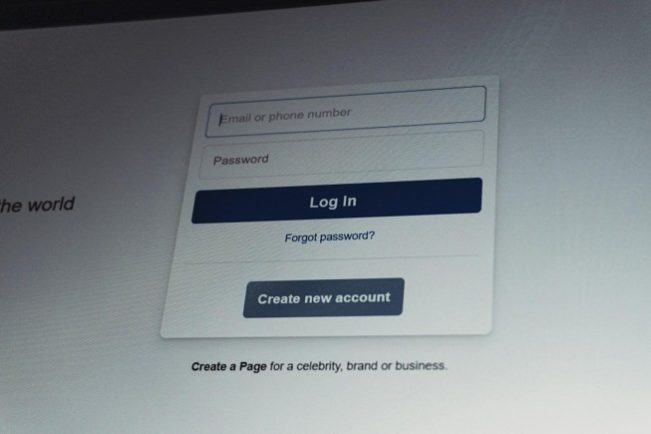
For years, online convenience meant faster pages, cleaner apps, and fewer clicks. Now the contest has moved to the front door. Before a form can be submitted or an account can be checked, the service must answer a basic question: can it recognize the person without requiring them to start over?
One-login systems are emerging from that pressure. They promise less repetition, fewer forgotten passwords, and a smoother route through services that once treated every visit like a first meeting. There is, of course, some tension that follows. A simpler login can make digital life easier, but it also concentrates more trust in the systems that decide who gets in.
Why the Login Box Became the Bottleneck
For years, the login box was treated as the dull prelude to the actual service. That has changed. A clumsy sign-in now costs organizations completed transactions, support time, and patience from users who are already doing the boring part of their day online.
Password fatigue is the obvious pressure point. People are told to create long, unique passwords for every account, then blamed when they reuse one or save a recovery email to an inbox they barely check.
The friction usually shows up in familiar ways:
- Forgotten passwords that turn quick tasks into reset loops.
- Verification codes sent to old numbers or ignored inboxes.
- Repeat checks across services that already hold similar details.
- Abandoned forms when access becomes harder than the task.
The push for single sign-on comes from that mismatch. Instead of asking every service to become a separate island, companies and public bodies are looking for trusted credentials that can travel across several doors. The best versions feel almost invisible, while the weak versions simply move the frustration to a larger lock.
The UK’s Public-Sector Test Case
Britain’s public example is GOV.UK One Login is designed to let people use a single account to access central government services. It’s no universal internet passport. Its purpose is narrower, tied to services where identity checks and secure access carry more weight than retail convenience.
The project has also made digital identity less abstract. In older online systems, identity often meant little more than a username, a password, and perhaps a code arriving by text. A newer model links the person, the device, and the service more deliberately. Once that relationship is checked, repeat access can be less clumsy and more welcoming.
For residents, the benefit isn’t some futuristic interface. Something like a form that can be completed before the school run, a renewal that doesn’t require three resets, or a government service that doesn’t punish someone for forgetting which email address they created in 2015.
Convenience: Moving to Everyday Markets
Private companies have reached a similar conclusion through customer behavior. If a streaming subscription, payment app, or travel account makes sign-in feel awkward, for example, people pause. Worst still, sometimes they abandon the task completely.
In 2026 and beyond, the login screen must handle security without looking like an obstacle course.
The same expectation is visible in regulated digital markets. Online gambling, for example, has to balance identity checks, account controls and safer gambling rules with a smoother user journey. Searches around Inclave casinos in Canada reflect that wider appetite for less fragmented access, especially where verification and account management can feel repetitive. Users increasingly expect the hand-off between proof and access to feel coherent.
As a result, passwordless login starts to change the feel of everyday technology. Passkeys, often linked to a fingerprint, face scan or device PIN, remove the typed password from the moment of entry. The FIDO Alliance describes passkeys as cryptographic credentials linked to a website or app account. At the same time, the UK’s National Cyber Security Center has noted their resistance to phishing because they cannot be captured and reused like ordinary passwords.
The Trust Problem Behind the Shortcut
A single login feels reassuring until something goes wrong. If one credential opens several services, losing access can become more disruptive than forgetting one shop password. That is why the next stage of the trend is being shaped by recovery, privacy, and account portability, not just speed.
The strongest systems reduce the amount of reusable secret information circulating. Passkeys do this by replacing the shared password with a cryptographic exchange between the device and the service. A criminal can trick someone into typing a password into a fake page. The same trick isn’t viable when the credential is bound to the legitimate service.
The awkward cases still matter. A lost phone, a shared family device, or an older user who needs help can expose the gap between a clean product demo and real household use. Convenience looks far less tidy around those edges.
For local organizations, online security and ease of use are now judged in the same breath. A service that is safe but maddening will push people toward phone lines and paper workarounds, while a service that is quick but vague about privacy will not earn trust simply because it loads fast.
Moving Forward…
The old password style is unlikely to vanish in a single clean break. It will fade unevenly, though, first from services with the budget and pressure to simplify access.
The better test may be almost boring: fewer reset emails, fewer abandoned forms, and fewer people stuck at the gate when the task itself should have been straightforward.
Article written by Dave Mannion