


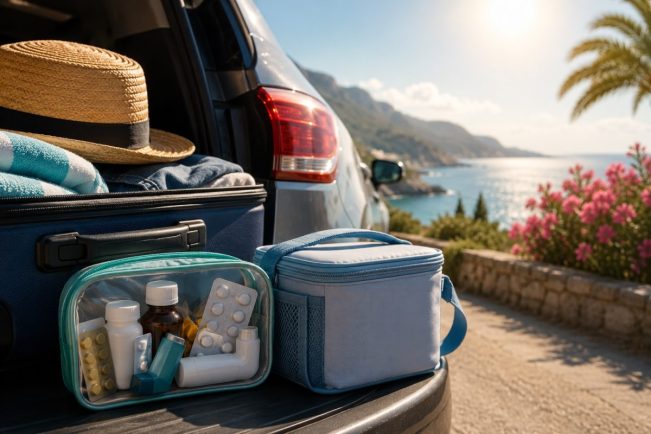
Medicines watchdog warns holidaymakers: heat can weaken your treatments
Britain’s medicines regulator has issued a fresh warning this summer, telling the public that a sun soaked car, an overstuffed suitcase, or a bathroom shelf could all be quietly damaging the medicines they rely on.
The Medicines and Healthcare products Regulatory Agency (MHRA) published the guidance on 17 July 2026, as part of a wider campaign called “Summer-proof your health.”
The regulator points out an irony familiar to many travellers, people carefully pack sun cream and check their passport twice, yet think nothing of leaving tablets or liquid medicines somewhere hot for hours on end. With school holidays underway and temperatures climbing, officials are asking the public to treat their medicine cabinet with the same care as the rest of their packing list.
The science behind the warning
Most medicines are formulated to be kept below 25°C, and the MHRA warns that higher temperatures can weaken their effectiveness over time. Not every medicine needs the fridge; some are fine at normal room temperature, but the rules differ from product to product. The regulator singles out insulin, some types of inhaler, skin treatment creams, and certain contraceptives as examples where correct storage is especially important.
It isn’t only drugs that are affected. Devices used to manage health conditions, such as blood glucose meters and insulin test strips, can also be sensitive to heat, and the MHRA advises checking the manufacturer’s instructions for each individual product rather than assuming one rule applies to everything.
“Far hotter than people expect”
Dr Alison Cave, the MHRA’s Chief Safety Officer, explained that spaces such as a parked car, a packed suitcase, a caravan, or a sun facing room can reach temperatures well beyond what most people anticipate, and that this heat can compromise how certain medicines perform. She said taking a few minutes to read the storage guidance and store medicines properly can make the difference between a treatment working as intended and one that has quietly lost potency.
The regulator’s practical advice
The MHRA is asking people to take several simple precautions this summer:
- Read the patient information leaflet, or the packaging itself, for storage guidance, noting that these leaflets can also be found on the MHRA’s website. Some products need cooling, others need to be shielded from light or warmth.
- Never leave medicines sitting in a hot car or a suitcase left in the sun, especially while travelling.
- At home, keep medicines somewhere cool, dry, and shaded from sunlight, steering clear of bathrooms and anywhere near a heat source.
- If in doubt about how something should be stored, or if a medicine may already have been left somewhere too hot, ask a pharmacist for guidance.
The agency also wants anyone who suspects a medicine is not working properly to raise it with a pharmacist or GP, and to file a report through its Yellow Card scheme, which logs suspected problems with medicines and devices.
Additional advice on medicines, medical devices, and staying well in warm weather is being published throughout the summer as part of the MHRA’s ongoing campaign, available via its website.
About the regulator
The MHRA is the UK body tasked with regulating medicines and medical devices, with a remit to ensure that products on the market are both effective and hold an acceptable level of safety. It operates as an executive agency under the Department of Health and Social Care, and describes its decisions as grounded in evidence based assessment, weighing the benefits of a treatment against its potential risks.
Main Image: For illustration purposes only.