


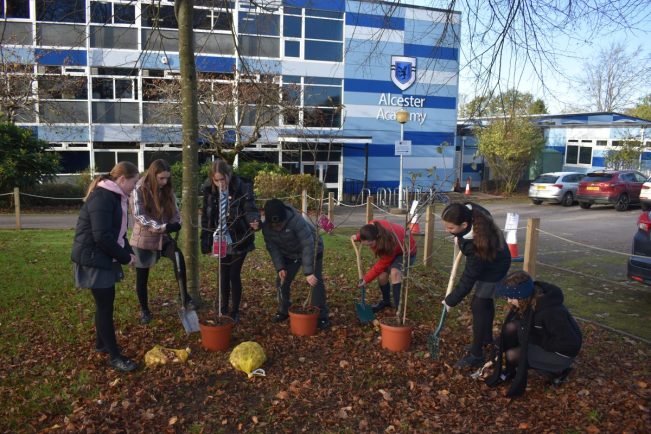
PRIMARY and secondary schools across Alcester have united in a community-wide effort to boost local biodiversity by planting more than 2,500 bee-friendly spring bulbs, thanks to funding from Alcester Town Council and the Alcester Food Festival.
The scheme aims to create vibrant pockets of pollinator-friendly planting across school grounds, supporting bees and other wildlife while giving pupils hands-on opportunities to learn about environmental stewardship.
Equipped with spades and trowels, the students worked collaboratively to contribute to the town-wide planting effort.
Their enthusiasm reflects a growing commitment among young people in Alcester to help protect and restore local ecosystems.
Olivia Nemeshanyi, sustainability lead at Alcester Academy, praised both the students’ involvement and the wider community partnership.
She said: “It’s been inspiring to see our students so engaged in improving their local environment.
“Planting bee-friendly bulbs not only supports vital pollinators but also helps our young people understand how small actions can make a big difference.”
She added everyone was part of a scheme which brought schools and the community together for a greener future.
Alcester Grammar School – one of the UK’s LEAF (Linking Environment And Farming) Demonstration Schools – played a central role in the project with support from the charity.
Charles Gill, head of sustainability at Alcester Grammar School, said: “Planting trees is one of the very best long-term investments in our local areas.
“Alcester Grammar School is proud to have led on tree planting across Alcester, and this autumn planted thousands of bulbs on our site.
“Working with Alcester Academy, local primaries and the rest of our schools alliance has been a fantastic way for staff and our student led Eco Society to build a sense of community while making a real, substantial difference to biodiversity in our area.”
With thousands of bulbs now in the ground across Alcester’s schools, the town can look forward to a colourful spring display – and a meaningful boost for local pollinators.