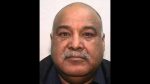


INSPIRED by ‘a very full life’ Redditch man Roger Henry Lippett has written a book on his life which began living on the Batchley Estate. He went on to serve in the Royal Navy and wants to share his story.
He was born on January 30 1939 on the council estate, with his dad’s name Henry, being given to him as his middle name.
Here he sheds light on his life family and friends as a social record of sorts that may be of interest to his children, grandchildren and the people of Redditch.
Although he said he had never achieved great wealth or fame he felt his life had moments worth recounting.
In his words: “I now live in the beautiful city of Plymouth in Devon but I will always be a Batchley boy.
“Far have I traveled, and much have I seen and this is my story, serialised in the Redditch Standard.”
Chapter 17
ON October 22 1962 we were faced by the Cuban Missile Crisis.
It had been discovered by an American spy plane flying over Cuba that missile silos and other missile base equipment had been installed in Cuba by the USSR – now Russia.
The American president, John F. Kennedy also discovered that Soviet warships were at sea transporting missiles en route to the island.
He ordered a quarantine of the seas around Cuba and US warships took up station.
So the situation was tense as the Soviet and American ships converged and the world held its breath as the possibility of nuclear war was very real.
As the tension grew the Soviet president Khrushchev agreed to dismantle the Cuban bases if America agreed to remove missiles from Turkey.
This was agreed and the world breathed a sigh of relief as a possible nuclear holocaust was averted.
The crisis ended on October the 28. This had been an anxious time!
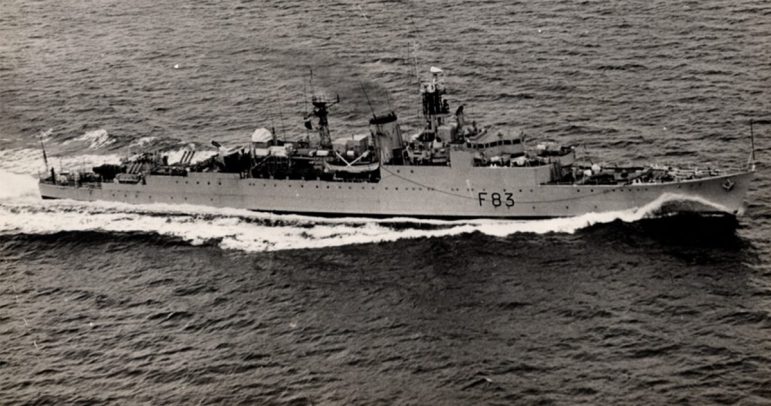
Meanwhile in Bermuda HMS Ulster was alongside with much of her machinery in bits although the headline in one British newspaper read ‘West Indies Fleet on Full Alert’ – Hardly!
Having said that no ship on earth could have done much had the situation erupted.
My shipmate “Bungy” Williams (who is now 84 years old and we are still in contact) says that once the Soviets heard that HMS Ulster was on station they rapidly backed off.
Yes I’m sure our four inch gun would have really had them worried.
Meanwhile in the sunshine of the West Indies Christmas came around and the ship was alongside in
Barbados for Christmas and the New Year.
This was my second Christmas away from home but the first one away from my wife and baby daughter
Susanne and I missed them terribly. This however was the lot of the sailor.
In the 1950s and 60s and 70s we still had a comparatively large fleet and bases in many parts of the world,
the main ones being HMS Rook in Gibraltar, HMS Terror in Singapore, HMS Tamar in Hong Kong, and the Valletta naval base in Malta, not to mention the small out posts such as the Bermuda base, so naval personnel were spread around the world.
However if one had to be away from home Barbados was as nice as anywhere to be but after Christmas and new year we sailed on January 1 1963 for Roadtown Tortola.
The job of the Royal Navy in peacetime is to prepare for war, to render assistance and aid where necessary and to show the flag and make friends and influence people.
Ulster generally made a good impression wherever we visited.
It may sound an easy life but it was not all a bed of roses. We lived in very cramped conditions which were cockroach infested.
The climate was wonderful for lying on the beach but not for living on a steel ship with no air conditioning.
Down in the engine room the temperature was very high and we would lose gallons in perspiration.
We had no fresh bread or milk and although we made the best of it we missed our families.
We (in the engine room branch in particular) were on call around the clock to fix everything from the main refrigeration, motor boats, generators etc. to the bridge screen wipers.
Not to mention round the clock watch keeping. We both drove the ship and maintained it.