


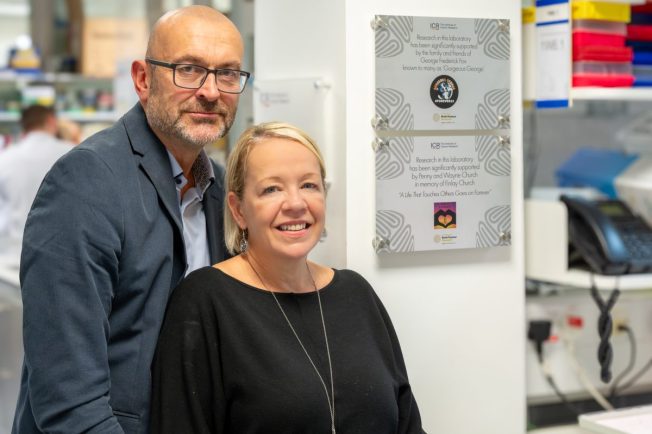
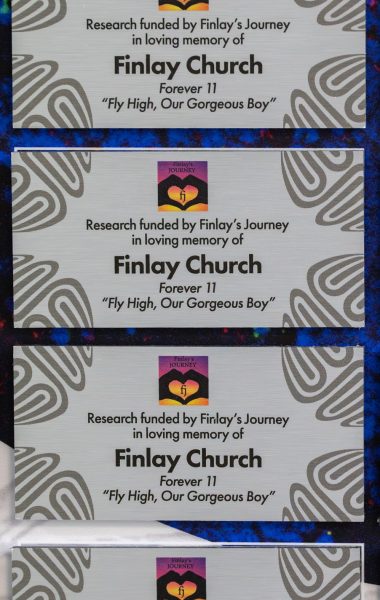
THE PARENTS of Finlay Church, from Alvechurch, who died 10 years ago from an incurable brain tumour have visited a memorial plaque in his name which recognises nearly £200,000 raised towards helping find a cure for the devastating disease.
The family is working with the charity Brain Tumour Research to raise awareness of the need to invest more funds into innovative new treatments for children with brain tumours.
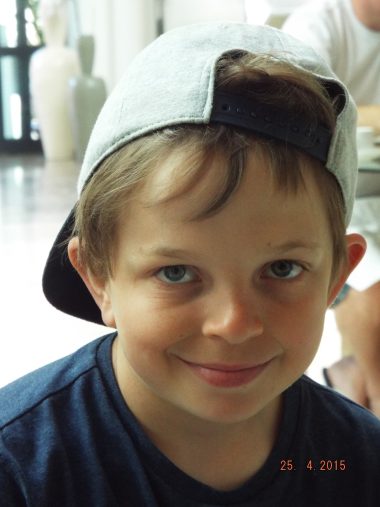
Fin was diagnosed with an aggressive glioblastoma when he was just 10 years old. Over 17 months, Finlay endured neurosurgery, chemotherapy, radiotherapy and trials testing the efficacy of re-purposed drugs. Today marks 10 years since Finlay sadly died on November 25, 2015.
Finlay’s parents, Penny and Wayne, were invited to the Brain Tumour Research Centre of Excellence at The Institute of Cancer Research (ICR) to find out how their fundraising is helping support scientists working to find, test and validate new treatment options for high-grade gliomas in children. Sadly, for some types of these tumours, less than five per cent of patients survive more than two years.
To improve outcomes for brain tumour patients, the centre acts as an international hub for the development of new treatments, accelerating more therapies into clinical trials for children.
The goal is to get treatments into trials within the next four years.
Penny said: “Visiting the ICR and seeing the incredible work being led by Prof Chris Jones was deeply moving, especially in such a poignant year, as we mark what would have been Fin’s 21st birthday and 10 years since we lost him.
“Although the progress being made comes too late for Fin, and for so many other children taken by this devastating disease, we will never stop fighting.
“We will continue to support Brain Tumour Research, because no child should ever be diagnosed with a cancer that is effectively a death sentence.
“Seeing Fin’s plaque in place in the lab was incredibly emotional. Knowing researchers will pass it every day and perhaps feel inspired by our gorgeous boy to drive change, means more than we can express.
“We are forever grateful to our community, friends, family, and supporters for helping us raise the funds that allow us to try to make a difference.”

Since Finlay’s death, Penny and her family have worked tirelessly alongside Brain Tumour Research, campaigning for more money to fund research to find a cure and better treatment for people diagnosed with the disease.
As well as the plaque, which recognises the more than £180,000 raised in Finlay’s name, Penny and Wayne placed 56 tiles at the centre’s Wall of Hope. Each tile represents a day of funded research.
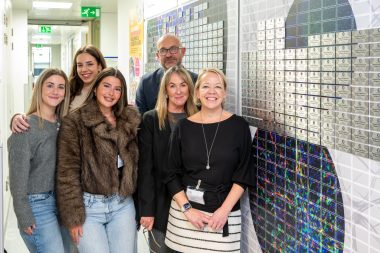
Letty Greenfield, community development manager for Brain Tumour Research, said: “We’re really grateful to Finlay’s family for their support and generosity.
“We hope their visit to our Centre of Excellence at ICR offered a useful insight into all we’re doing to improve treatment options for patients and, ultimately, find a cure. “Brain tumours continue to kill more children and adults under the age of 40 than any other cancer yet, to date, just one per cent of the national spend on cancer research has been allocated to this devastating disease since records began in 2002. This has to change.”
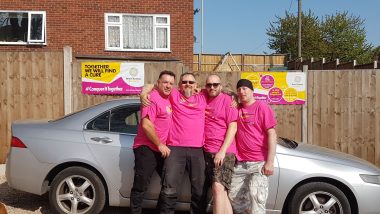
Brain Tumour Research funds sustainable research at dedicated centres in the UK.
It also campaigns for the Government and larger cancer charities to invest more in research into brain tumours to speed up new treatments for patients and, ultimately, to find a cure.
The charity is the driving force behind the call for a national annual spend of £35million to improve survival rates and patient outcomes in line with other cancers such as breast cancer and leukaemia.
Visit: braintumourresearch.org/donate-now to donate to the cause.