


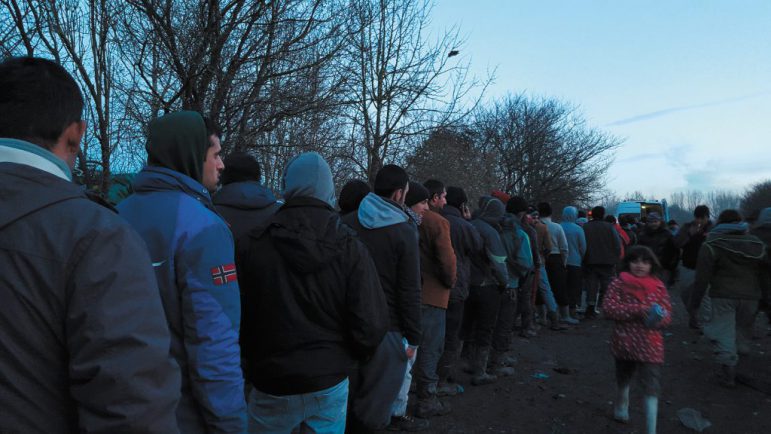

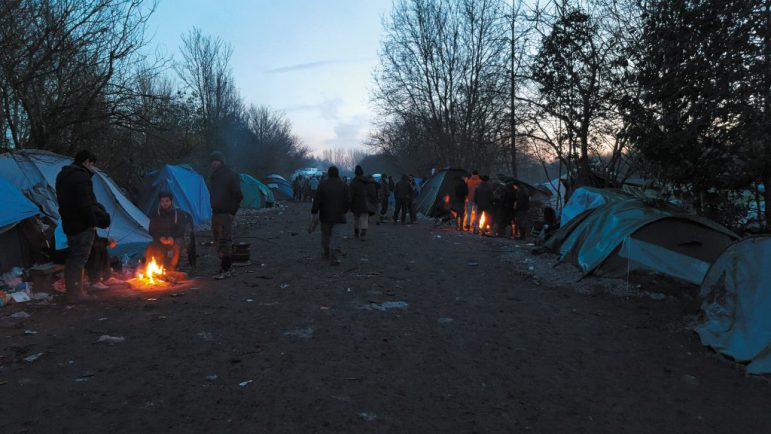

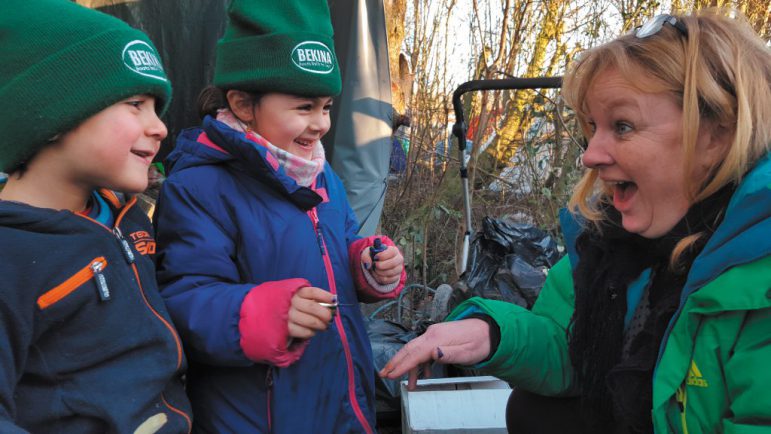
AS 2,500 refugees struggle to survive deplorable conditions in a makeshift camp in Dunkirk, northern France, groups like Worcestershire’s People in Motion play a crucial role in bringing aid to those in need.
Standard reporter Anu Shukla spent a weekend in the camp to discover the difference their help and supplies were making.
SOME say you’re never quite the same after an experience like this – and there’s nothing to prepare you for it either. But two decades of packing for festivals and extreme travel had at least trained me to cram a small case with essentials to survive.
After jumping on a train to London, hopping on to the Victoria line to Brixton and diving into a car, we headed for Dover and on to Dunkirk.
At the entrance of the Grande Synthe camp we were searched by French police, before being greeted by an apocalyptic sight as smoke from the cinders of fires burning all night hung thick in the air. The bright sunlight made everything look hazy and surreal.
As volunteers and refugees worked side by side, it was difficult to tell who was who, and I soon realised anything could happen in a day where 90 per cent of the relief effort came from a small untrained army of volunteers dealing with a colossal humanitarian crisis.
People in Motion founder Elaine Lawson greeted me with a huge hug and told me of the problems faced getting aid on to the site.
As Elaine hatched a plan to get ‘dignity’ packs to refugee women and children who, she said, were ‘too afraid to leave their tents’, I meet Malvern steelworker Gavin Fraser.
He had been there for three months and told me about how he and others ran through the woods with supplies on Christmas Eve when police stopped food from entering the camp.
I then got to see their tactics first hand – as soon as the coast was clear, we snuck the dignity packs, containing much-needed toiletries and clothes, into the camp and gave them out to those who needed them.
Gavin said: “As bad as you think it is right now, the situation would be ten times worse without the effort of volunteers.
“It’s been an emotional rollercoaster. Physically and mentally, it’s the most difficult thing I’ve ever had to deal with.
“These people are not terrorists or scroungers. They’re fighting terrorists and deserve so much more than this. I feel I’d be letting them down if I wasn’t here.”
At this point it became absolutely evident to me that volunteer groups like these carried an astronomical weight and without them, the situation would be much worse. At the same time, they must literally fight to help those trapped in beyond-human conditions.
The Saturday became a feat for all volunteers when a protest in Calais distracted the authorities, allowing supplies though the doors of the Dunkirk site.
The next morning, a frosty swamp of faeces and mud covered the camp and as I heard a small baby had been taken to hospital the dark shadow of hyperthermia loomed over the water-logged site.
Smiles of resilience were beginning to fade as I witnessed the tiniest children weather sub-zero temperatures in thin nylon tents. Elaine and company disappeared that afternoon to hunt down some gas fire heaters.
Later on, at the women and children’s distribution centre sorting through a mountain of boots with volunteers from Mexico and the Netherlands, I receive a text.
A new family with a six-month old child had just arrived after spending the night on the streets. It was all hands to the pump as we put up a six-man tent for the new arrivals who were soon settled in their new ‘home.’
There were hugs and kisses of gratitude all around. The couple were clearly relieved, but their seven-year old daughter visibly traumatised.
Everyone I met was full of hope for the future. The Kurdish answer to David Beckham was one of them.
Gavin spotted him and called him over. Known as ‘Power,’ the 20-year old footballer had played in the Kurdistan league since the age of 17 and left his country after receiving a death threat from ISIS. He said the situation would be ‘unthinkable’ without the volunteers.
Power compares himself to Zinedine Zidane because ‘he was also poor like me.’
He tells me: “My dream is to be somewhere safe, to play football and to be someone.
“I want to go to England and see Arsène Wenger and tell him about my life, my story. I love him. That’s my dream.”
There is no concept of time in the refugee camp. Everything seems to unfold in slow-motion yet before we even realise, it’s Monday morning.
While litter picking with Jen and Tom, excitement breaks out among a group of children who get a ride through the camp on a trailer.
Inside, I find Droitwich resident Mairtin O’Graidy smiling widely. He invites me to hop onboard and we drive to the Calais ‘Jungle’.
Dunkirk is a far cry from the organised chaos of Calais with its school, library, legal centre, vaccination unit, several churches, mosques and theatre dome.
Medicins Sans Frontieres have permission to build a new camp with 500 heated tents near the Dunkirk sight.
Mairtin tells me: “It will improve the situation massively but it has to happen now.
“People will die of hyperthermia in the next few weeks if it doesn’t.”
While refugees wait for the new camp, those next few weeks will either make or break the human spirit.
And volunteer groups like People in Motion will continue to do all they can to get aid where it’s needed – and whenever necessary, fight the obstacles to get it there.
We contacted the French authorities about the group’s problems with getting aid into the camp but no one was available for comment.