

Sir Keir Starmer has declined to set out a clear timeline for when defence spending will reach 3 per cent of GDP, as concerns mount over delays to a long awaited investment plan for the Armed Forces.
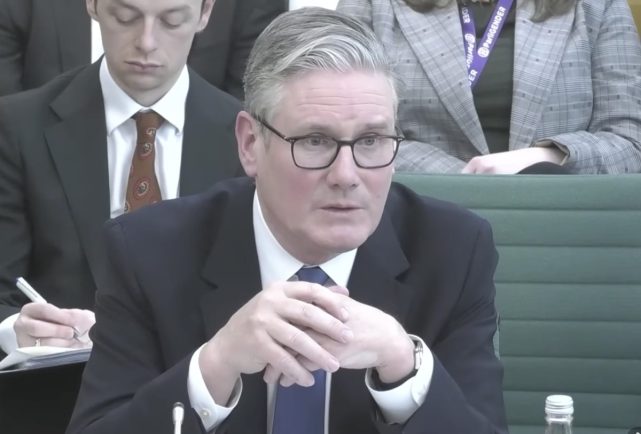
Appearing before the Commons liaison committee on Monday, the Prime Minister faced questions from MPs on when the Government would meet its stated ambition to increase defence spending beyond the 2.5 per cent target set for 2027.
While ministers have said they aim to reach 3.5 per cent by 2035, no firm date has been given for achieving 3 per cent, a position that has drawn criticism from across the political spectrum.
Asked by Tan Dhesi, chairman of the Commons defence committee, to “chart out a path” to the 3 per cent level before the next election, Sir Keir said plans would be set out “in due course”.
He told MPs:
“We’ve already committed to 2.5 per cent in 2027 and we’ll hit that. We have made that commitment to 3 per cent in the next Parliament and to 3.5 per cent in 2035.”
However, he did not provide further detail on how or when the 3 per cent threshold would be reached.
The exchange comes amid continued delays to the Government’s Defence Investment Plan, which is intended to outline spending priorities over the next decade. The plan was originally expected in the autumn but has yet to be published, with reports of ongoing discussions between the Treasury and the Ministry of Defence over funding allocations.
Some estimates suggest the defence budget could face a shortfall of around £28 billion over the next four years, although this figure has not been formally confirmed by ministers.
During the session, Sir Keir was also challenged by Sir Bernard Jenkin, chairman of the liaison committee, over the UK’s level of preparedness. Referring to concerns raised by military leaders, Sir Bernard asked:
“The chiefs of staff are saying we need to be ready for war. So when are we going to be prepared and prepared for what?”
As the Prime Minister pointed to ongoing work on the investment plan, Sir Bernard responded:
“It smacks of an enormous complacency.”
Sir Keir rejected that characterisation, arguing that current pressures stem in part from previous reductions in defence capability. He later acknowledged that the UK is not currently on a “war footing”, noting that funding decisions are still being finalised.
Outside Parliament, defence figures have urged greater urgency. Colonel Hamish de Bretton Gordon, a former tank commander, said the current security environment demands faster action.
“We are on the precipice at the moment of conflict in the Middle East, we have got what’s happening in Ukraine, things could not require spending on defence more than any other time probably since the Second World War,” he said. “It’s just bonkers to keep kicking this into the long grass. Is this not the priority?”
Recent events have added to the debate. Following an attack on RAF Akrotiri in Cyprus, the UK deployed HMS Dragon, a Type 45 destroyer, which arrived around three weeks later. The response drew attention to the size and availability of the Royal Navy’s surface fleet, with several destroyers currently out of service for maintenance.
In the Commons, Defence Secretary John Healey was also questioned about the timing of the Defence Investment Plan. Shadow defence minister James Cartlidge asked whether it would be published before Parliament rises this week.
Mr Healey said work was ongoing, but did not give a firm publication date. Mr Cartlidge later described the situation as “entering the realms of farce”, warning that delays could affect key capability upgrades.
The issue of defence spending has also highlighted differences within government. Chancellor Rachel Reeves is reported to be scrutinising the value for money of proposed increases, as departments negotiate spending priorities.
Separately, Mr Healey has faced criticism over comments relating to the future of the UK–US military base on the British owned island of Diego Garcia in the Chagos Islands. The Government is in discussions over a potential deal that would see sovereignty of the islands given to Mauritius, then leasing back the strategically placed military base for a reported 99 year period.
Speaking in Parliament, the Defence Secretary suggested that such a long term lease arrangement could offer greater security than outright ownership. However, the remarks have been questioned by defence commentators and former military figures, who argue that retaining full sovereignty would provide stronger guarantees over long term access and control.
Critics have pointed to earlier warnings from senior figures, including Admiral Lord of Spithead, who questioned how a base described as a vital naval, air and intelligence asset could be considered more secure under another nation’s sovereignty than under Britain’s own control.
The issue forms part of a wider debate about the strategic implications of the proposed Chagos deal, which would also see the UK commit billions of pounds to Mauritius at a time of heightened global tensions and growing focus on the country’s defence posture. Conservative leader Kemi Badenoch has argued that British taxpayer money would be better spent on the British Armed Forces.
An independent report by EY Parthenon has previously warned of a long term gap in defence funding, suggesting that without further commitments, some planned infrastructure and capability projects may remain unfunded.
With global tensions continuing to rise, the timing and scale of future defence investment is likely to remain a key issue for both the Government and Parliament in the months ahead.