


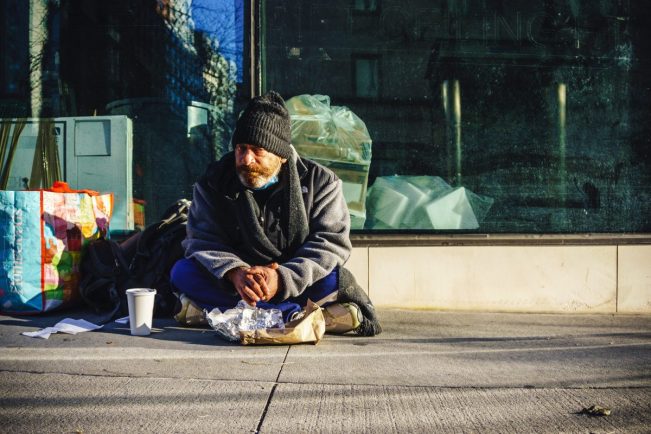
The intertwining issues of drugs, mental health, and homelessness form a complex and relentless cycle that plague our communities.
For years, governments have spent billions on this problem, only for the homeless population to scale new heights each passing year. It is time to approach this as a multidimensional challenge that it is, something that will not be solved by merely throwing more taxpayer dollars at it.
Ending homelessness requires a comprehensive approach involving local authorities, law enforcement agencies, and civic society. In addition to reclaiming our public spaces, and once again making our cities safer, healthier and more inclusive, breaking this cycle is increasingly a moral imperative for all of us.
In this article, we discuss a slew of different approaches in this regard, to address the root causes, and bring an end to this vicious cycle once and for all.
Understanding The Interplay
The interplay between drugs, mental health, and homelessness is complex and requires deep understanding to address effectively.
Recognizing The Interconnected Challenge – Substance abuse often leads to mental health issues, while pre-existing mental health conditions can increase vulnerability to substance abuse.
These factors, combined with structural inequalities and limited access to affordable housing, contribute to homelessness. Acknowledging these interconnected challenges is crucial for effective intervention.
Tackling Stigma & Shaping Attitudes – Stigma surrounding drug addiction, mental health, and homelessness perpetuates the cycle.
Individuals struggling with drug addictions, homelessness and mental health issues are often faced with the lack of empathy and aversion from civic society.
This can only be changed with the help of education and awareness campaigns that can help challenge the various stigmas and stereotypes associated with such people in the margins of society.
Prevention & Early Intervention
If an individual spends long enough time on the streets, without a roof over their heads, mental illness and substance abuse problems are inevitable.
Similarly, those with drug addictions or other mental health issues may find it increasingly difficult to hold down a job, or function socially, eventually leading to homelessness if they lack a familial support system.
This makes early interventions critical in all three scenarios, if we want to avoid people from getting stuck in this self-destructive loop. The best way to do this is by funding civic groups that stay close to the ground and intervene as soon as they find individuals in crisis.
Achieving such a response is certainly achievable in this day and age, with human services wings of local governments and non-governmental organizations having access to centralized information systems, bringing much needed efficiency and accountability to the overall process.
Addressing Homelessness
Addressing homelessness is critical in breaking the cycle of drugs, mental health issues, and homelessness.
Local authorities, law enforcement, and civic society can create a foundation for individuals to rebuild their lives and break free from the cycle by providing stable housing and comprehensive support services.
Housing First Approach – Adopting a “Housing First” approach is critical in breaking the cycle. This approach prioritizes providing immediate, stable housing for individuals experiencing homelessness without preconditions.
By securing stable housing, individuals can access the necessary support services, including mental health care and substance abuse treatments, increasing their chances of a successful recovery and reintegration into society.
Final Words
The problem of drugs, homelessness, and mental illnesses have hit crisis levels across our major cities, presenting a major moral issue, in addition to safety concerns. Traditional methods of dealing with these issues have only made them worse in recent years, warranting a fresh take.
While the methods discussed in this article have been proven to show results, putting them into action is a whole other ball game.
Through collective action, empathy, and a commitment to human dignity, we can build a society where everyone has the opportunity for health, well-being, and a place to call home.
This is a submitted article