


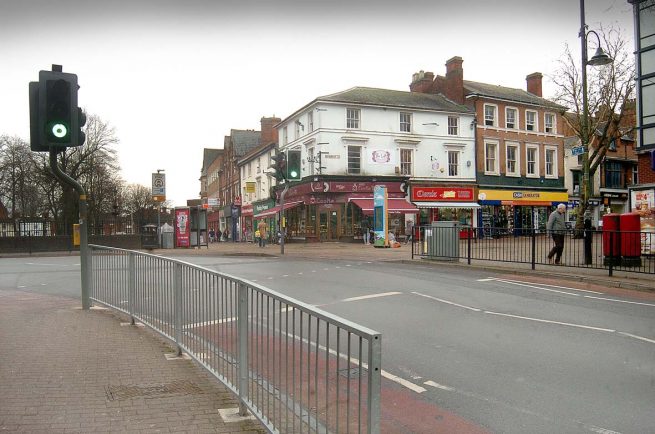
Is the character of a town defined by the reliability of its household names or the unique personality of its independent shopkeepers?
As Redditch navigates the economic currents of 2026, this question has become central to the future of the local high street.
The town centre, much like others across the UK, is witnessing a distinct divergence in how businesses operate, with a clear battle line drawn between the algorithmic efficiency of national giants and the bespoke, relationship-driven approach of local entrepreneurs.
The physical makeup of Redditch’s retail sector has undergone a significant transformation over the last few years.
Historically, town centres were dominated by general merchandise stores, but the rise of e-commerce has forced a pivot toward the “experience economy.”
National chains have responded by streamlining their physical footprints, focusing on “click-and-collect” hubs and showroom-style outlets.
In contrast, independent retailers in the area have moved into spaces that require high levels of service, such as artisan cafes, specialized grooming services, and niche hobby stores, which are harder to replicate online.
The primary battleground between these online and in-person retail is the definition of “service.”
For national chains, service is increasingly defined by speed, friction reduction, and digital integration.
Self-checkout terminals, app-based ordering, and standardized return policies offer a predictable, low-stress experience for shoppers in a rush.
This model prioritizes the commodity of time, appealing to busy professionals and families who value efficiency above all else during their weekly routines.
Conversely, independent retailers are doubling down on the human element, turning transactions into interactions.
The value proposition here is knowledge and curation.
A local butcher or independent fashion boutique owner in Redditch offers expertise that an automated system cannot match, guiding customers toward purchases that arguably offer better long-term satisfaction.
This personalized attention fosters a sense of loyalty that is emotional rather than transactional, creating a community hub where social interaction is as important as the purchase itself.
When it comes to retaining customers, national chains leverage their size to offer sophisticated financial incentives.
These brands utilize vast amounts of consumer data to tailor discounts and push notifications, keeping their brand top-of-mind.
In highly competitive sectors like gambling, businesses often rely on exclusive perks to maintain their most valuable clientele.
The top-tier loyalty schemes in the United Kingdom found at online casinos rarely match what a local high street slots arcade can offer.
These systems are designed to lock in high-value spending through bespoke benefits, creating a “walled garden” that makes it disadvantageous for the customer to switch to a competitor.
Independent retailers, lacking the capital for proprietary apps or complex data mining, compete by offering a different kind of value: local economic contribution.
While they may not offer tiered status points, the “reward” for the consumer is often the visible improvement of their immediate environment.
When a resident spends money at a local shop, a significant portion of that revenue stays within Redditch, paying for local suppliers, accountants, and staff who also live in the area.
The economic disparity in how this revenue circulates is stark.
In the US, research highlights a significant contrast in economic impact, noting that every $100 spent at local independent retailers generates $45 of secondary local spending, compared to a much lower figure for big-box chains.
We can assume the case is similar in the UK. For the conscientious shopper in Redditch, this multiplier effect serves as a powerful retention tool.
The knowledge that their purchase directly supports their neighbour’s livelihood and the town’s prosperity acts as a moral loyalty program, one that national chains, which often repatriate profits to distant headquarters, struggle to replicate.
Looking ahead through 2026, the outlook for Redditch depends on maintaining a healthy diversity of retail options.
The economic pressures of the past few years have stabilized somewhat, but the cost of doing business remains high.
For the town to thrive, urban planners and landlords must recognize that national chains and independents are not enemies but partners in a cohesive ecosystem.
A successful town centre requires the anchor draw of the big brands alongside the unique flavour of the independents to extend dwell time and increase average spend.