


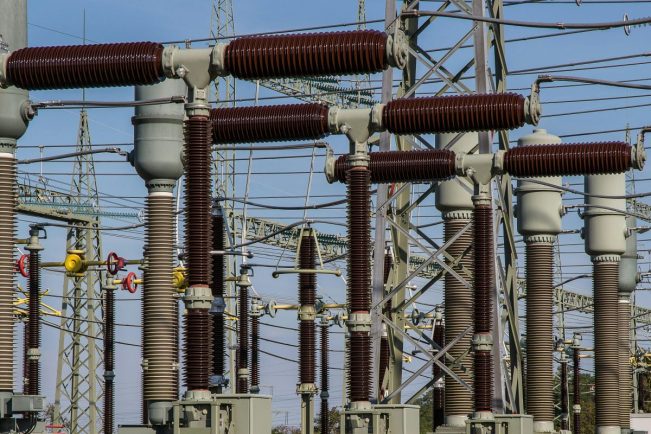
In March 2024, Centrica completed construction of a 20-megawatt gas-fired peaking plant on an industrial estate in Redditch, giving a once-polluting diesel power station a new lease of life.
The site was previously used as a diesel-fuelled power station that produced reliable power for Redditch, but at the cost of polluting greenhouse gas emissions.
In its first year of operation, it has provided a crucial back-up energy supply to the grid, operating only when renewables cannot meet national demand.
Although the site still predominantly uses natural gas, a fossil fuel, the development has significantly reduced the carbon footprint of the electricity used by the homes and businesses of Redditch.
The essential role of peaker plants
The British national grid is undergoing its fastest transformation in decades to meet the government’s ambitious target of a clean grid by 2030. In 2024, wind turbines provided a record 30% of overall power generation.
However, the challenge with relying on wind to power the country is its intermittency. The organisation in charge of operating and balancing the National Grid, NESO, has no control over wind conditions and therefore cannot rely on wind turbines to produce electricity during periods of peak demand.
That’s where ‘peaking plants’, such as the Redditch facility, come in. Unlike traditional power stations designed to run constantly, peaking plants are built for flexibility. They can start up within minutes and deliver power precisely when it is needed most, during sudden spikes in demand or when renewable output dips.
Without this rapid response, the grid would struggle to stay balanced, risking blackouts or forcing system operators to curtail renewable generation.
The business model of the Redditch power plant
The Redditch power plant operates only when the grid requires extra support, raising a key question about how its owner, Centrica, generates revenue.
The business model of the Redditch facility is built around flexibility rather than the sale of a constant output of power. It is funded through the Balancing Mechanism, a scheme operated by the grid operator.
Under the Balancing Mechanism, whenever demand rises sharply or renewable generation falls, the grid operator calls on plants like Redditch to start up at short notice. For providing back-up to the grid, the plant receives a significantly higher price for the electricity it produces.
Green hydrogen ready
What makes the Redditch plant especially significant is not just its role today, but also what it is designed to do tomorrow.
The new facility has been built to operate not only on natural gas, a fossil fuel, but also on hydrogen, a potentially green source of energy.
As we move closer to a clean energy grid, the contribution from wind farms will continue to grow. This creates an increasingly common scenario in which, on windy days, these farms generate more electricity than the grid can readily use.
An innovative project in Teesside, in the North East, has received government funding to use excess wind power to produce hydrogen on an industrial scale. Since the hydrogen produced by this project will be carbon-neutral, it is described as ‘green hydrogen’.
The Redditch power plant has been designed to combust a mix of hydrogen and natural gas, significantly reducing its carbon footprint.
Centrica and the net-zero transition
The transformation of the Redditch site is one example of how Britain’s largest energy companies are adapting to the pressures of climate change and the demands of a cleaner grid.
Centrica, is best known for its British Gas brand, a leading domestic and business energy supplier, has been moving away from its historic dependence on fossil fuels and repositioning itself as a player in low-carbon energy.
The company is now funnelling hundreds of millions of pounds each year into projects that aim to make the UK’s power system both greener and more secure. That investment stretches from renewable generation and battery storage to pioneering flexible back-up plants like Redditch.
Article by Ben Brading.