


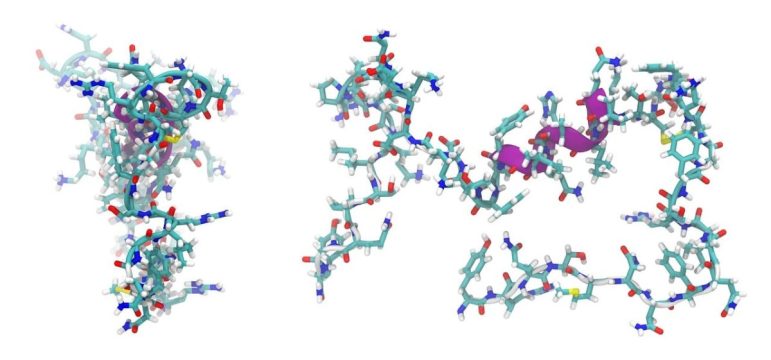
The Semaglutide peptide has emerged as a compelling subject in biochemical and physiological research due to its potential implications in metabolic and endocrine studies.
As a synthetic analog of glucagon-like peptide-1 (GLP-1), it has been hypothesized to play a significant role in glucose regulation, modulation of hunger hormones, and neuroendocrine signaling.
Investigations suggest that its structural modifications may contribute to better-supported stability and prolonged activity, making it a valuable molecule for experimental models examining metabolic pathways.
Beyond its potential research implications, the Semaglutide peptide is believed to serve as a crucial research tool for scientists investigating metabolic disorders, neuroendocrine regulation, and hormonal signaling. The complexity of metabolic pathways and their intricate interplay with neuroendocrine mechanisms make Semaglutide an invaluable model for laboratory experiments aimed at understanding obesity, diabetes, and other metabolic syndromes.
Structural Characteristics and Mechanism of Action
The Semaglutide peptide is designed to mimic the endogenous GLP-1 molecule while exhibiting increased resistance to enzymatic degradation. Research suggests that its extended half-life may enable prolonged interaction with GLP-1 receptors, thereby supporting various physiological processes within the research model. Unlike endogenous GLP-1, which is rapidly degraded by dipeptidyl peptidase-4 (DPP-4), the Semaglutide peptide may exhibit a better-supported binding affinity to plasma proteins, potentially contributing to its sustained activity.
Additionally, the ability of Semaglutide to activate GLP-1 receptors is thought to be crucial for modulating insulin release and maintaining glucose homeostasis. Experimental studies suggest that prolonged receptor engagement leads to supported glycemic control, making Semaglutide a valuable model for investigating progressive insulin resistance.
Structural Composition and Resistance to Degradation
The molecular backbone of Semaglutide incorporates specific modifications that support its enzymatic stability. Endogenous GLP-1 molecules degrade within minutes due to rapid enzymatic cleavage. However, Semaglutide’s alterations—including amino acid substitutions and fatty acid conjugation—are hypothesized to offer increased half-life by binding to albumin proteins in circulation. This characteristic enables researchers to study its long-term impacts on metabolic pathways without requiring frequent adjustments for exposure.
Receptor Interactions and Signaling Pathways
The Semaglutide peptide has been hypothesized to interact with GLP-1 receptors in multiple tissues, including pancreatic beta cells, neurons, and gastrointestinal cells. Investigations purport that its engagement with these receptors may trigger intracellular signaling cascades that support insulin secretion, neurotransmitter release, and gut motility. These interactions position the peptide as a valuable tool for studying complex physiological networks.
Pancreatic Beta Cell Function and Insulin Secretion
Studies indicate that the Semaglutide peptide may support insulin secretion by stimulating pancreatic beta cells, thereby helping to regulate blood glucose levels. It seems to modulate the intracellular cAMP (cyclic adenosine monophosphate) signaling cascade, leading to increased insulin granule exocytosis. This feature is believed to enable researchers to model various forms of diabetes and explore research interventions.
Central Nervous System (CNS) Research
Beyond its pancreatic impacts, Semaglutide suggests neuroprotective potential. GLP-1 receptors in the brain regulate hunger hormone signals and overall satiety, indicating a possible role for Semaglutide in obesity research. Experimental studies suggest that Semaglutide’s receptor interactions might lead to decreased hunger hormone signaling and supported energy balance, positioning it as a candidate for studying fat loss mechanisms and hypothalamic control of feeding behaviors.
Potential Implications in Metabolic Research
Semaglutide peptide’s versatility is speculated to extend to numerous metabolic investigations:
Glucose Homeostasis
It has been hypothesized to play a significant role in glucose regulation through the:
● Increased insulin secretion
● Mitigated glucagon release
● Better-supported peripheral glucose uptake
● Slowed gastric emptying, reducing postprandial hyperglycemia
Semaglutide has been proposed as a tool for investigating novel approaches to diabetes research.
Appetite and Energy Balance Research
Research indicates that Semaglutide’s action in the hypothalamus may support caloric intake behaviors, impacting satiety signals and energy homeostasis within the research model. Investigations suggest that the peptide might interact with key neuroendocrine pathways, including those regulating hunger hormone signals and satiety.
Researchers have purported that this may potentially lead to adjustments in caloric intake and metabolic activity. Scientists hypothesize that Semaglutide may contribute to modulating hormonal responses associated with feeding, including the secretion of peptides such as glucagon-like peptide-1 (GLP-1), which plays a role in satiety signaling.
Furthermore, studies suggest that Semaglutide may support reward-related mechanisms within the brain, indicating that the peptide might alter perceptions of food-related stimuli, potentially having some impact on eating behaviors and preferences. By examining its central supports, researchers aim to gain deeper insights into the intricate balance between neuroendocrine signaling and metabolic adaptation, which may inform broader investigations into appetite regulation and energy expenditure.
The peptide’s hypothesized role in adjusting nutrient intake and supporting systemic energy distribution remains an area of exploration in metabolic research, with scientists seeking to understand how these processes contribute to long-term physiological adaptations.
Lipid Metabolism and Mitochondrial Function
Semaglutide has been hypothesized to support lipid metabolism by modulating fatty acid oxidation. This mechanism may enable researchers to investigate lipid storage disorders and alterations in mitochondrial energy production.
Emerging Areas of Research
● Neuroprotective Impacts: Studies suggest that Semaglutide may mitigate the progression of neurodegenerative diseases.
● Cardiovascular Properties: Investigations purport that it may support endothelial function.
● Gut Microbiome support: Semaglutide’s potential interactions with digestive microbiota warrant further study.
Conclusion
Semaglutide peptide represents a cornerstone in metabolic and endocrine research. Its broad Implications make it invaluable for experimental studies exploring neuroendocrine signaling and metabolic stability. Continued research may reveal additional physiological insights, further advancing our understanding of metabolic regulation. Visit Biotech Peptides for more useful peptide research.
References
[i] Marso, S. P., Bain, S. C., Consoli, A., Eliaschewitz, F. G., Jódar, E., Leiter, L. A., … & Buse, J. B. (2016). Semaglutide and cardiovascular outcomes in patients with type 2 diabetes. New England Journal of Medicine, 375(19), 1834–1844. https://doi.org/10.1056/NEJMoa1607141
[ii] Hölscher, C. (2018). Novel dual GLP-1/GIP receptor agonists exhibit neuroprotective effects in models of Alzheimer’s and Parkinson’s diseases. Neuropharmacology, 136, 251–259. https://doi.org/10.1016/j.neuropharm.2017.11.018
[iii] van Can, J., Sloth, B., Jensen, C. B., Flint, A., Blaak, E. E., & Saris, W. H. M. (2014). Effects of the once-daily GLP-1 analog liraglutide on gastric emptying, glycemic parameters, appetite, and energy metabolism in obese, non-diabetic adults. International Journal of Obesity, 38(6), 784–793. https://doi.org/10.1038/ijo.2013.162
[iv] Cuthbertson, D. J., Irwin, A., Gardner, C. J., Daousi, C., Purewal, T., Furlong, N., … & Wilding, J. P. H. (2012). Enhanced mitochondrial function following a 12-week exercise intervention in patients with type 2 diabetes. Diabetes Care, 35(12), 2154–2160. https://doi.org/10.2337/dc12-0122
[v] Marso, S. P., Daniels, G. H., Brown-Frandsen, K., Kristensen, P., Mann, J. F. E., Nauck, M. A., … & Buse, J. B. (2016). Liraglutide and cardiovascular outcomes in type 2 diabetes. New England Journal of Medicine, 375(4), 311–322. https://doi.org/10.1056/NEJMoa1603827