



In today’s fast-paced world of commerce, businesses are constantly seeking ways to streamline their supply chains and maximize efficiency.
One crucial aspect of this pursuit is the transportation of goods, and efficient ground transportation solutions have become increasingly important.
Road freight services offer a versatile and cost-effective option for businesses of all sizes, providing the flexibility and reliability needed to keep operations running smoothly.
The Advantages of Road Freight Transportation
Road freight services offer numerous benefits that make them an attractive option for businesses across various industries. Some of the key advantages include:
● Flexibility in route planning and scheduling
● Door-to-door delivery capabilities
● Cost-effectiveness for short to medium-distance shipments
● Ability to handle a wide range of cargo types and sizes
● Reduced handling and lower risk of damage compared to other modes
● Faster transit times for regional and domestic shipments
These advantages make road freight an essential component of many companies’ logistics strategies, enabling them to meet customer demands efficiently and maintain a competitive edge in the market.
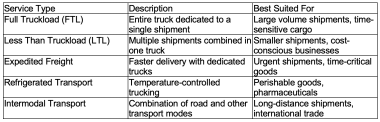
Types of Road Freight Services
Road freight services come in various forms, each designed to cater to specific transportation needs. Understanding these options can help businesses choose the most suitable service for their requirements:
Technological Advancements in Road Freight
The road freight industry has undergone significant transformations in recent years, driven by technological advancements. These innovations have improved efficiency, safety, and sustainability in road transportation:
GPS Tracking and Route Optimization
Real-time GPS tracking allows for precise monitoring of shipments and enables dynamic route optimization. This technology helps reduce fuel consumption, minimizes delays, and improves overall delivery times.
Electronic Logging Devices (ELDs)
ELDs have become mandatory in many regions, automating the process of recording driving hours and ensuring compliance with regulations. This technology enhances safety by preventing driver fatigue and improves operational efficiency.
Blockchain in Logistics
Blockchain technology is revolutionizing the way transactions and documentation are handled in the freight industry. It provides enhanced security, transparency, and traceability throughout the supply chain.
Autonomous Vehicles
While still in development, autonomous trucks have the potential to transform the road freight industry. These vehicles could increase safety, reduce labor costs, and enable 24/7 operations in the future.
Sustainability in Road Freight
As environmental concerns continue to grow, the road freight industry is actively working towards more sustainable practices. Some key initiatives include:
● adoption of electric and hybrid vehicles
● implementation of aerodynamic designs to reduce fuel consumption
● use of alternative fuels such as biodiesel and natural gas
● optimization of loading and routing to minimize empty miles
● investment in driver training programs for eco-friendly driving techniques
These efforts not only contribute to environmental protection but also often result in cost savings for businesses in the long run.
Choosing the Right Road Freight Provider
Selecting the appropriate road freight service provider is crucial for ensuring smooth operations and customer satisfaction. When evaluating potential partners, consider the following factors:
1. Network coverage and capacity
2. Technology integration and tracking capabilities
3. Safety record and compliance with regulations
4. Flexibility in service offerings
5. Reputation and customer reviews
6. Pricing structure and transparency
7. Sustainability initiatives and practices
By carefully assessing these aspects, businesses can find a road freight partner that aligns with their specific needs and values.
The Future of Road Freight Services
The road freight industry continues to evolve, driven by technological advancements, changing consumer expectations, and environmental concerns. Some trends shaping the future of road freight services include:
● Increased focus on last-mile delivery solutions
● Integration of artificial intelligence for predictive maintenance and route planning
● Growth of digital freight matching platforms
● Development of platooning technology for improved fuel efficiency
● Expansion of urban consolidation centers to reduce congestion and emissions
As these trends take hold, businesses that adapt and embrace innovation in their road freight strategies will be better positioned to thrive in an increasingly competitive marketplace.
Road freight services remain a cornerstone of modern logistics, offering unparalleled flexibility and efficiency in the movement of goods. By understanding the various options available, leveraging technological advancements, and prioritizing sustainability, businesses can harness the full potential of road freight to drive growth and meet the evolving demands of their customers.